If sensitive paperwork keeps accumulating, you need a disposal plan that matches the volume and pace of your records. Scheduled document shredding gives you a recurring way to control routine paperwork, while a one-time purge makes more sense when you need to clear a large backlog at once. At Document Destruction, our team provides both options with AAA-certified on-site shredding across Greater Cincinnati, Dayton, and Northern Kentucky, so you can destroy documents at your location instead of transporting them elsewhere.
Start With the Volume of Documents You Generate
Your first decision should come from how quickly confidential records accumulate. A business that creates patient files, financial records, legal documents, personnel paperwork, or other sensitive materials every week faces a different disposal challenge from a household or office cleaning out years of archived files.
A recurring schedule works best when destruction needs to become part of your normal records-management routine. A one-time purge works better when the immediate goal is to eliminate accumulated material and regain control of storage space. Scheduled document shredding can then keep new paperwork from recreating the same backlog.
One-Time Purge Shredding for Large Cleanouts
At Document Destruction, our one-time shredding service gives you a defined opportunity to remove a backlog without committing to recurring visits. Our one-time purge service handles large volumes of sensitive paperwork and fits office cleanouts, business relocations, storage-unit cleanouts, records-retention cleanup, annual or quarterly file purges, and end-of-year financial record disposal.
Clear Out Years of Archived Files
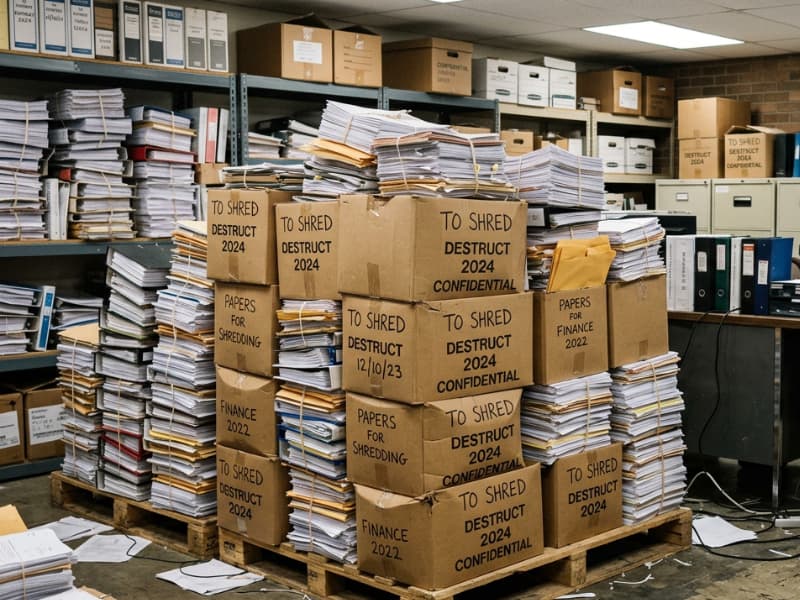
Shredding old documents becomes difficult when boxes continue to accumulate in storage rooms, filing areas, or spare offices. A purge lets you gather records that have reached the end of their required retention period and move them out of storage in one organized project.
Support Office Moves and Closures
Relocations and closures often expose large quantities of outdated paperwork. A one-time service gives you a practical way to handle those records during the transition rather than carrying unnecessary files into a new space.
Handle Annual or Quarterly Purges
Some organizations review records at set points during the year but do not generate enough material to justify frequent visits. In that situation, a planned purge can become part of the annual records-cleanup process.
Remove Residential or Estate Paperwork
One-time shredding also works for personal records, estate cleanouts, and storage-unit projects. If you have accumulated tax documents, financial statements, medical paperwork, or other private records that no longer need to remain in your possession, a single scheduled service can clear the backlog.
Scheduled Shredding for Ongoing Document Control
Scheduled document shredding creates a repeatable process for paperwork that reaches the end of its useful life throughout the year. Instead of allowing sensitive files to pile up, you can establish a regular pickup schedule and place eligible documents into secure containers between visits.
Keep Confidential Paperwork Moving
Routine disposal becomes easier when employees know exactly where documents belong after they no longer need them. Locked shredding consoles and totes provide a designated collection point and help keep confidential paperwork out of ordinary trash and recycling.
Reduce Internal Shredding Work
Handling large quantities with office shredders consumes employee time and can create inconsistent disposal habits. A recurring service moves the destruction task into a defined external process while allowing staff to focus on their primary responsibilities.
Build Consistency Into Records Management
A recurring schedule creates accountability. Instead of relying on memory or waiting for storage rooms to fill, you can establish a predictable destruction routine that supports document-retention policies and internal security procedures.
Support Multiple Workplace Needs
At Document Destruction, recurring service can make sense for healthcare, legal, financial, education, government, and other organizations that routinely manage confidential information. Our recurring service also includes locked containers, helping protect paperwork between scheduled visits.
Security Should Remain the Deciding Factor
The disposal method matters because sensitive paperwork can contain names, addresses, account details, health information, legal information, employee records, and business data. Throwing confidential records into ordinary trash or recycling creates unnecessary exposure before final disposal.
We provide AAA-certified onsite shredding and support requirements involving HIPAA, FACTA, and GLBA. Scheduled document shredding also gives you a repeatable process for handling sensitive records as they reach the end of their retention period. Our process includes onsite destruction and a Certificate of Destruction after shredding, creating a documented record of the completed service.
Onsite Service Adds Visibility and Control
With onsite shredding, you do not need to send sensitive paperwork away for destruction before you can see what happens to it. Our mobile shredding truck arrives at your location, and we destroy the documents onsite. Our process shreds paperwork into small pieces, and we issue a Certificate of Destruction after completion.
For organizations that prioritize accountability, scheduled document shredding can provide direct visibility into the destruction process. It also reduces the need to coordinate transportation or move confidential records through unnecessary handling points.
Plan Around Your Records, Not Your Storage Space
A common mistake is waiting until filing cabinets, closets, or storage rooms become full before deciding what to destroy. A stronger approach starts with your retention requirements and establishes a clear point for secure disposal.
Scheduled document shredding can support that routine by giving you a predictable outlet for documents that have reached the end of their retention period. A purge can address the backlog when storage has already become a problem.
If you are comparing annual paper purge service costs, ask what volume, containers, service frequency, and access requirements are included in the quote. Our site also states that we charge no trip fee, fuel surcharge, or hidden fees, which can make quote comparisons easier.
Before scheduling either service, identify the document categories involved, estimate the volume, review applicable retention requirements, and decide how quickly you need the material removed. Scheduled document shredding works best when those decisions become part of a consistent records-management process. Those steps make the service easier to organize and help prevent premature destruction of records that still require retention.
Make Secure Shredding Part of Your Routine
Scheduled document shredding can give you a repeatable way to manage sensitive records, while a one-time purge can remove accumulated paperwork when you need a clean start. Our service options let you choose a disposal schedule based on your document volume, retention practices, and operational needs.
Choose the Right Shredding Schedule
Choose Document Destruction for secure onsite shredding that fits your current document volume and long-term records-management needs.